Minergie for commercial spaces – is it worth it?
Discover if Minergie-certified commercial spaces are worth it. We highlight the benefits, costs, room temperature, and ventilation of Minergie offices and commercial properties in Switzerland.

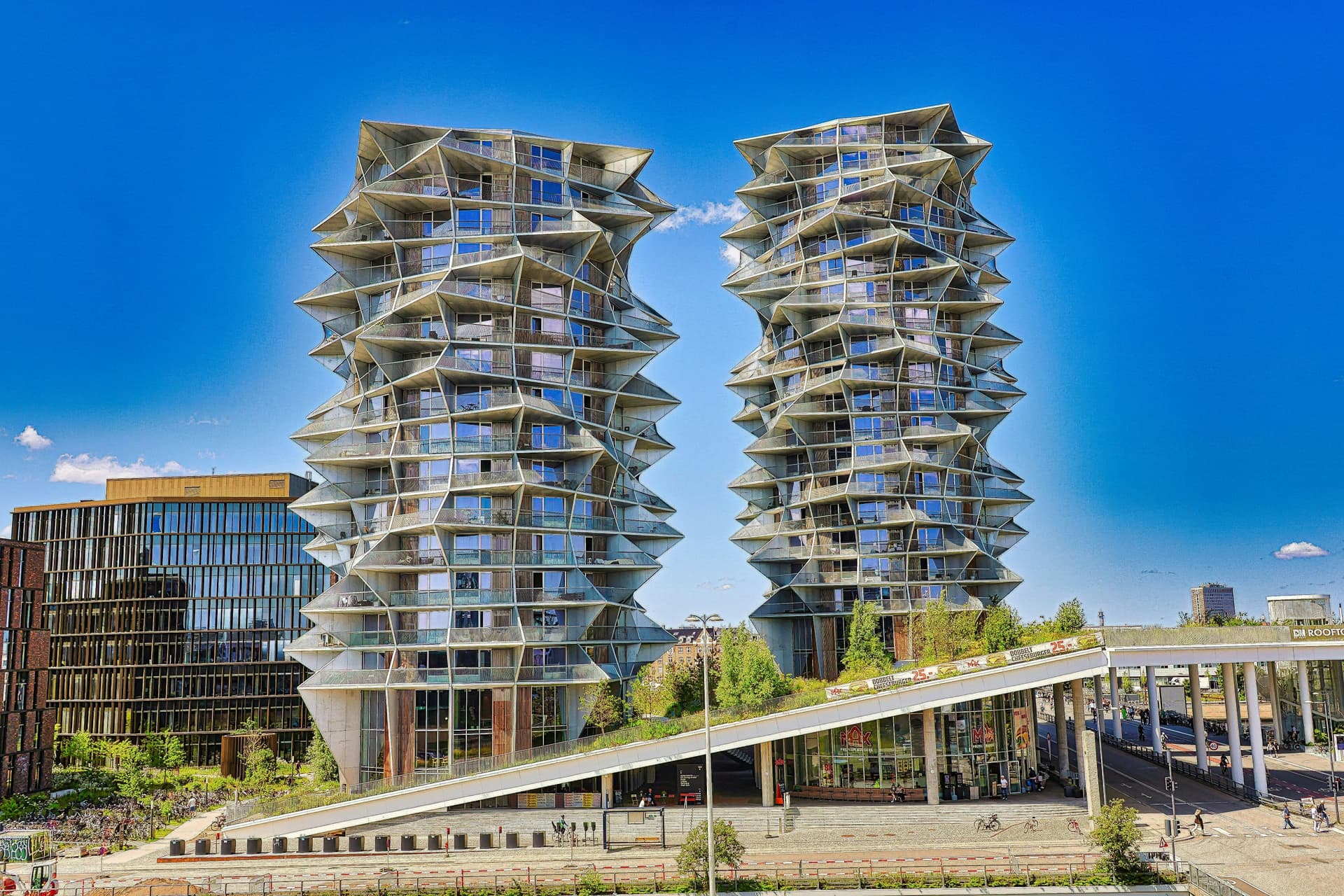
Minergie-certified commercial spaces promise lower energy costs, higher comfort, and a better image. But do the often higher rents justify the added value? In this article, you will learn exactly what Minergie brings to the table, what the optimal room temperature looks like, what to consider regarding ventilation, and whether the investment is truly worth it for your company. |
What is Minergie and what standards are there?
Minergie is a Swiss quality label for energy-efficient and sustainable buildings. Since 1998, the standard has been setting benchmarks in the construction industry and is continuously being developed. Three variants are particularly relevant for commercial spaces:
Minergie: The basic standard with a limit for energy demand that is significantly below the legal minimum. Buildings must have controlled ventilation and a high-quality building envelope.
Minergie-P: This standard sets even higher requirements for energy efficiency. Buildings according to Minergie-P require particularly little heating energy and have exceptionally good insulation.
Minergie-A: The highest level, where the building generates more energy over the year than it consumes. This is usually achieved through photovoltaic systems.
In addition, there is the "ECO" supplement, which places further demands on health, building ecology, and sustainable materials. For commercial spaces, this can be particularly attractive if employee health and corporate social responsibility are important company values.
What are the benefits of Minergie for commercial spaces?
The advantages of Minergie-certified commercial spaces go far beyond pure energy savings. Here are the most important arguments:
Lower operating costs
Minergie buildings require up to 40% less energy than conventional buildings. This is directly reflected in the payment on account for ancillary costs (Nebenkosten akonto), which make up a significant portion of commercial tenancies. Especially with long-term leases, these savings add up considerably.
Higher comfort and productivity
The controlled ventilation ensures consistently good air quality, which demonstrably increases the concentration and performance of your employees. Studies show that productivity in well-ventilated rooms can be up to 10% higher. In addition, there are no drafts from open windows and the temperature remains pleasantly constant.
Image gain and sustainability
A Minergie label signals a sense of responsibility and future orientation. For many customers and business partners, sustainability is an important criterion. Especially for startups and innovative SMEs, a location in a Minergie building can be a competitive advantage. In addition, you often already meet ESG (Environmental, Social, Governance) requirements, which are becoming increasingly relevant for larger companies and institutional investors.
Value stability of the property
Even if you do not benefit directly from the increase in value as a tenant, value stability has indirect advantages: Landlords are more willing to invest in maintenance and modernization, and the long-term availability of the space is secured.
What room temperature is appropriate for a Minergie building?
A common misconception is that Minergie buildings must be cooler. In fact, it is about intelligent temperature regulation, not sacrificing comfort.
The Minergie standard recommends a room temperature of 21 to 23 degrees Celsius for offices during the heating season. In summer, the temperature should ideally not rise above 26 degrees. These values correspond to the general recommendations for healthy and productive working conditions.
It is important to understand: Minergie buildings achieve these temperatures with significantly less energy expenditure. The excellent insulation and heat recovery from the exhaust air ensure that the heat stays inside the building in winter and outside in summer. In addition, the building mass stores heat or cooling and releases it with a time delay, ensuring a very stable indoor climate.
A practical tip: In Minergie buildings, the temperature reacts more sluggishly to changes. Do not constantly turn the heating up and down, but find a constant, comfortable setting. The system is designed to continuously maintain an optimal climate.
How to ventilate in a Minergie building?
Controlled ventilation is a core element of every Minergie building. Unlike in conventional offices, the air exchange does not take place via open windows, but via a mechanical ventilation system. This often raises questions.
How does controlled ventilation work?
A ventilation unit continuously extracts used air from the rooms and supplies fresh outside air. Before the warm exhaust air is released outside, energy is extracted from it in a heat exchanger and transferred to the cold supply air. In this way, up to 90% of the heat is not lost in winter. The supply air is filtered, which is a particular advantage for allergy sufferers.
Can I still open the windows?
Yes, the windows can also be opened in Minergie buildings. However, this is not necessary and even counterproductive during the heating season, as the energy-efficient heat recovery is then interrupted. In summer or for special needs, you can of course ventilate. However, many users report that after an acclimatization phase, they hardly miss opening the windows anymore, as the air quality is consistently high.
Maintenance and filter replacement
For the ventilation to function optimally, the filters must be replaced regularly – usually twice a year. Clarify in the lease agreement who is responsible for maintenance. For many commercial properties, the landlord or a facility management service provider takes care of this; the costs are then billed via the ancillary costs on account.
Individual settings
Modern Minergie ventilation systems can often be regulated on a room-by-room or zone-by-zone basis. If the air volume seems too low or too high to you, talk to the building manager. Fine adjustments are usually possible without any problems and can further significantly increase comfort.
Costs and economic efficiency of Minergie commercial spaces
The crucial question for many companies is: Does the energy saving justify the often higher rent?
Rent surcharge
Minergie-certified commercial spaces usually cost 5 to 15% more in net rent than comparable conventional properties. This surcharge varies depending on the location, equipment, and market situation. In Zurich or Geneva, the difference can be smaller than in smaller cities where the supply of certified spaces is more limited.
Savings on ancillary costs
Energy costs are significantly lower in Minergie buildings. Depending on the intensity of use and building type, you can expect savings of 30 to 50% on heating costs. For larger office spaces (from 200 sqm), this can amount to several thousand francs per year. In addition, there are often lower costs for cooling in summer, as the buildings remain pleasantly tempered even without air conditioning due to their construction.
Total cost consideration
A sample calculation: For a 150 sqm office space with a rent surcharge of 10% (approx. CHF 300 more per month) and a saving of CHF 200 on ancillary costs, CHF 100 in additional costs remain. However, these are put into perspective by the higher quality of work, fewer sick days due to better air quality, and the positive image.
Furthermore, Minergie buildings are future-proof: With increasingly strict energy regulations and rising energy prices, conventional buildings will tend to lose their attractiveness, while Minergie spaces will retain their value.
Subsidies and tax aspects
As a tenant, you do not benefit directly from building subsidies, but energy-efficient operating locations can be tax-advantaged in certain cantons. In addition, some banks accept better conditions for business loans if the company headquarters are sustainable. Inform yourself with your fiduciary about cantonal specifics.
Conclusion: Is Minergie worth it for commercial spaces?
Minergie is particularly worthwhile if you value sustainability, employee comfort, and long-term planning security. The higher rental costs are partially compensated by lower operating costs, and the qualitative advantages – from better air quality and more stable room temperatures to an improved image – are measurable.
For startups and SMEs that see their commercial space as part of their corporate identity, Minergie is a smart choice. Even for companies with many employees, the investment pays off through higher productivity and less downtime.
You should critically evaluate Minergie if your budget is very tight or if you only plan a short-term lease. In this case, the additional costs could outweigh the benefits.
Ultimately, the decision is individual. Take the time to visit different properties, speak with other tenants of Minergie spaces, and calculate transparently. At maison.work, you will find a selection of commercial spaces, including certified Minergie properties. This allows you to compare different options and find the space that perfectly suits your needs.
Note: This article is for general information purposes and does not replace individual advice. Energy performance indicators and savings potentials can vary depending on the building, use, and location. For binding information on a specific property, please contact the landlord or an energy consultant.
Looking for the right commercial space?
Discover offices, warehouses, workshops and other commercial spaces across Switzerland.