Pop-up shops: opportunities, risks and legal aspects
Pop-up shops are more than just a trend - they are a clever strategy for brands that want to use space flexibly. Find out about the opportunities, risks and legal aspects.

Pop-up stores are gaining increasing popularity in Switzerland – among established brands, start-ups, and creative companies alike. They offer a flexible way to temporarily showcase products or services, test new locations, and foster customer proximity without committing to a long-term lease. However, the concept also brings challenges: the lease term is short, the effort for setup and dismantling is high, and the legal framework – from short-term rental agreements to retail permits – needs to be carefully clarified. In this article, you will learn about the opportunities pop-up stores offer, what you need to consider as a tenant or landlord, and how to successfully implement the concept. |
What is a Pop-up Store?
The term «Pop-up Store» describes a temporary retail space that operates for a limited period – sometimes just for a weekend, sometimes for several months. The idea behind it is simple yet effective: instead of committing to a space long-term, you use a location strategically for a specific purpose, a season, or a campaign.
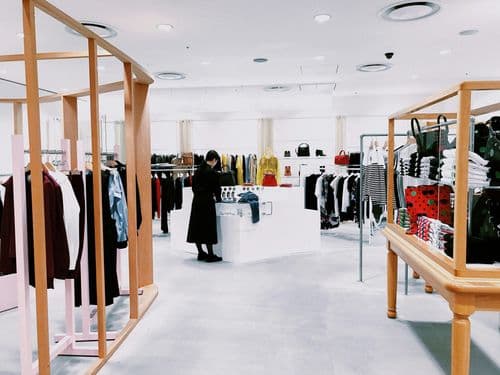
Pop-up stores emerge in vacant retail units, at markets, train stations, shopping centers, gallery spaces, or even in repurposed industrial buildings. Especially in cities like Zurich, Basel, Geneva, or Bern, an active ecosystem has developed around temporary retail spaces – landlords are increasingly open to short-term leases because they can effectively activate vacant spaces.
The Opportunities: Why Pop-up Stores Are So Attractive
For tenants, the biggest advantage is clear: Flexibility. You can test a location without committing for years. This is particularly interesting for companies looking to enter a new market or city without immediately renting a permanent retail space.
Furthermore, there's the marketing effect. Pop-up stores generate attention – by definition, they are temporary, which creates a certain urgency and exclusivity. Customers come because they know: if you're too late, you miss out. This FOMO effect («Fear of Missing Out») is a deliberate communication tool for many brands.
For landlords, temporary leases offer the opportunity to activate vacant spaces and generate at least short-term income. At the same time, they can get to know potential long-term tenants – many successful pop-up concepts lead to a permanent lease agreement.
From an urban development perspective, pop-up stores also play a positive role: they invigorate city centers, fill unused shop windows, and provide a more diverse offering in shopping streets. Municipalities and cities sometimes actively promote such concepts.
The Risks: What You Shouldn't Underestimate
As attractive as the concept sounds – there are real risks you need to be aware of before opening or leasing a pop-up store.
High Operational Effort
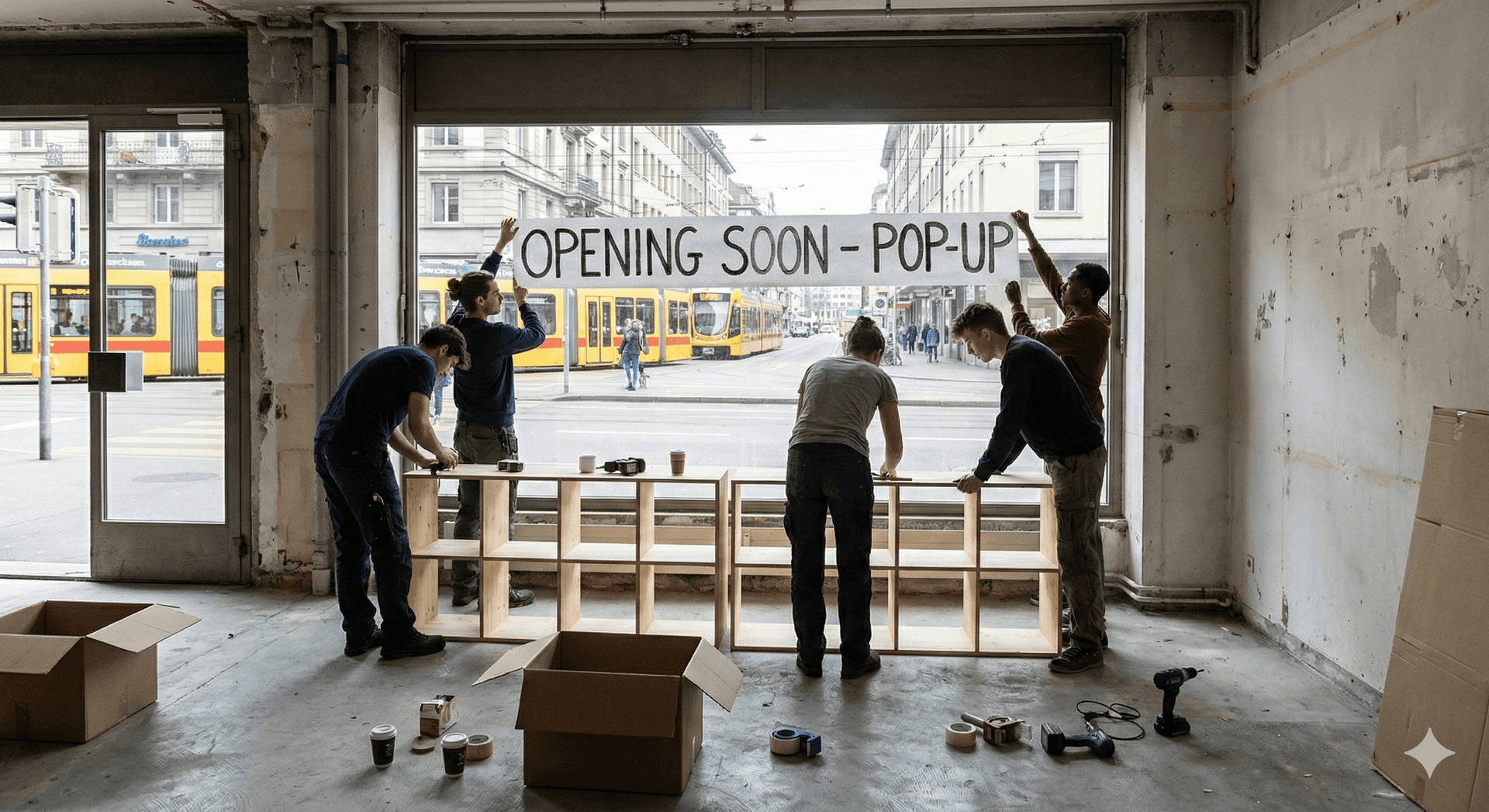
A pop-up store must be set up and dismantled in a short amount of time. This means intensive shopfitting management, fast logistics, and often significant setup costs – for a period that might only last a few weeks. If the operating period is too short to amortize the investment costs, the venture can quickly become a financial loss.
Location Dependence
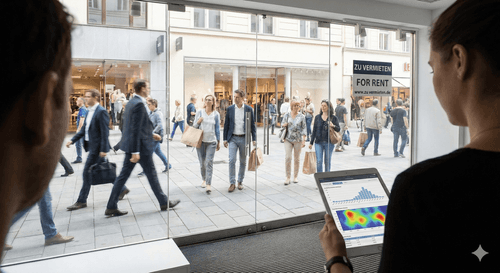
The success of a pop-up store heavily depends on its location. High foot traffic is crucial – but precisely in such locations, short-term leases are often more expensive and harder to find. Landing in a poorly frequented location risks the hoped-for attention failing to materialize.
Uncertainty on Both Sides
For landlords, short-term leasing entails planning uncertainty: the tenant can leave quickly, and the space becomes vacant again. Furthermore, property damage can occur if tenants move in and out rapidly. Clear contractual agreements are therefore essential.
Legal Aspects: What You Need to Know in Switzerland
The legal framework is a central issue that many interested parties underestimate. Precisely because lease agreements appear short-term and informal, there is often an impression that the details don't need to be strictly adhered to. This is a mistake.
The Lease Agreement
Even for a temporary lease, the Swiss Code of Obligations (OR) applies. Commercial lease agreements are less strictly regulated than residential leases under the OR, but they still offer protection for both parties. A written contract is strongly recommended even for short durations. It should clearly regulate, among other things, the exact lease term, the rent amount, ancillary costs, the condition of the property upon handover, and the return obligations.
For very short lease agreements – such as a few days or weeks – a usage agreement or license agreement is often used instead of a classic lease contract. These forms can be structured more flexibly and are sometimes subject to different legal provisions. It is worthwhile to seek legal advice on this early on.
Permits and Operating Requirements
Depending on the municipality and canton, operating a pop-up store may require a business permit, a special use permit, or at least a notification obligation. For example, anyone wishing to operate a temporary store in a public area or pedestrian zone generally needs a permit from the responsible municipality.
The zoning of the property is also relevant: Is the retail space designated for commercial use? Is public traffic allowed there? Such questions must be clarified before the start of the lease – ideally directly with the landlord and the competent building authority.
Insurance
Even for short-term operations, insurance is not an optional add-on. Business liability insurance is recommended to cover damages to third parties. If you store goods or inventory on site, contents insurance should also be considered. Building insurance is usually the landlord's responsibility – but here too, in case of doubt, clarify in writing who is liable for what.
Tax Aspects
Pop-up stores are fundamentally to be treated like any other point of sale for tax purposes. This means: sales must be correctly recorded, VAT must be accounted for (if you are VAT-liable), and income from temporary operations flows into your company's accounting. Anyone operating their first pop-up store as a test balloon should also check whether this already establishes a commercial activity that triggers corresponding registration obligations.
Tips for a Successful Pop-up Implementation
For your pop-up store not to remain just a nice concept but also to work in practice, there are some proven approaches. First: Define clear goals before starting. Do you want to sell, gain visibility, collect customer feedback, or test a market? The clearer your goal, the better you can align location, duration, and budget.
Second: Invest in preparation. A hasty pop-up store without a clear concept, without permits, and without sufficient staff is doomed to fail. Plan for lead time – not only for setup but also for communication. Social media, local media, and your existing network are your most important channels to generate attention.
Third: Choose the right space. A well-suited pop-up space is not just any retail unit – it matches your brand, has sufficient foot traffic, is easily accessible, and offers the basic technical equipment you need (electricity, internet, possibly a cash register). On maison.work, you can find commercial spaces in Switzerland that are also suitable for temporary uses.
Conclusion: Pop-up Stores as a Strategic Instrument
Pop-up stores are not a given success – but they are a powerful tool when used correctly. They enable flexibility, create visibility, and can serve as a springboard for a long-term presence. At the same time, they require careful planning, clear contracts, and an understanding of the legal framework in Switzerland.
Whether you are a company planning your first pop-up store or an owner looking to temporarily rent out a space – the key to success lies in preparation and a good mutual understanding. And that's exactly where maison.work can help: as a platform that connects commercial spaces with the right users.
Note: This article serves for general information purposes only and does not replace individual legal advice. For specific legal questions, we recommend consulting a specialist.
Looking for the right commercial space?
Discover offices, warehouses, workshops and other commercial spaces across Switzerland.