Fire Safety Regulations for Commercial Properties in Switzerland: VKF Guidelines Explained
Learn all about the VKF fire safety regulations for commercial properties in Switzerland. Practical implementation tips, requirements, and legal obligations.

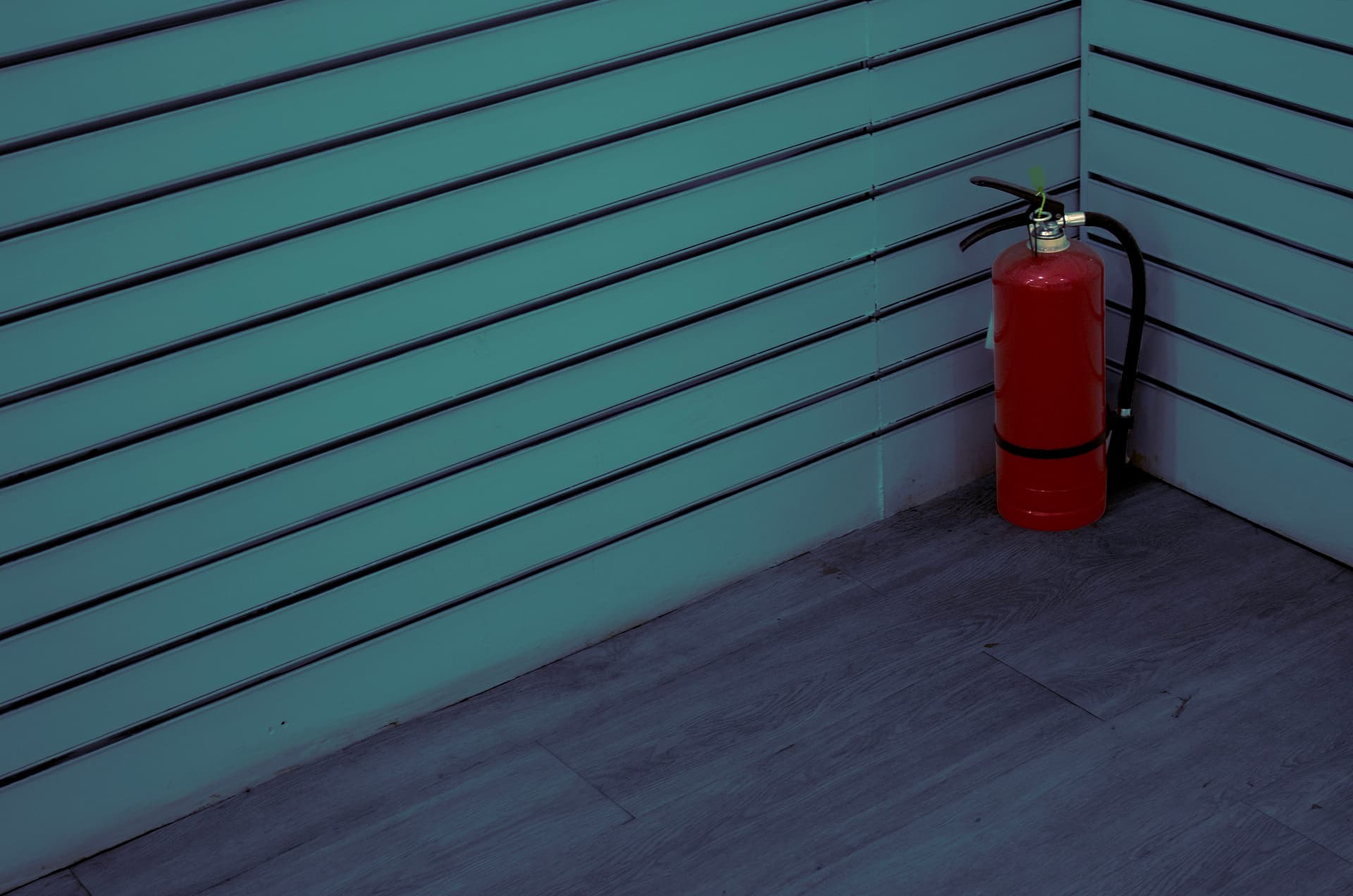
Fire safety in commercial properties is strictly regulated in Switzerland. The Association of Cantonal Fire Insurance Companies (VKF) sets binding guidelines that affect both owners and tenants. From structural to technical and organizational fire safety – anyone who rents commercial space or leases it out must know and implement the relevant regulations. This article explains the most important VKF guidelines, shows which measures are required, and clarifies the responsibilities of everyone involved. |
The VKF and its Importance for Fire Safety in Switzerland
The Association of Cantonal Fire Insurance Companies (VKF) is the central institution for fire safety in Switzerland. It develops harmonized fire safety regulations implemented by the cantonal fire police authorities. The VKF fire safety guidelines apply throughout Switzerland and form the basis for the planning, construction, and operation of buildings – particularly commercial properties.
In contrast to residential buildings, commercial properties often have higher fire safety requirements. The reasons for this include a higher number of people, specific uses (such as production, storage, or hospitality), and the associated increased fire loads. The VKF guidelines distinguish between different building categories and specify which safety objectives must be achieved.
For you as a tenant or landlord of a commercial space in Basel, this means: compliance with VKF regulations is not optional, but legally mandatory. Violations can lead to fines and, in serious cases, jeopardize operating licenses.
Key Fire Safety Regulations for Commercial Properties
The VKF Fire Safety Regulations 2015 (in the currently applicable version) form the core of Swiss fire safety legislation. They are divided into various areas, all of which are relevant to commercial properties:
The Fire Safety Guideline 10-15 regulates general fire safety requirements for buildings. Here, the safety objectives are defined: people, animals, and property must be protected from the dangers and impacts of fires. In addition, the spread of fire and smoke must be prevented.
Particularly important for commercial properties are the requirements for escape and rescue routes. These must be dimensioned and arranged so that everyone can leave the building safely and in time in the event of a fire. Permissible escape route lengths, the number of exits, and signage are clearly regulated.
In addition, there are special guidelines for specific uses. For example, Guideline 17-15 deals with warehouse and production buildings, while Guideline 18-15 covers retail stores. Depending on the type of your business, different requirements may apply.
Fire Protection Requirements by Building Category
The VKF divides buildings into different categories based on size, height, and use. For commercial properties, medium to high building categories are particularly relevant:
Overview of Building Categories
Category III includes smaller commercial buildings (e.g., with low occupancy). Minimum requirements for escape routes, fire compartments, and extinguishing systems already apply here.
Category IV and V affect medium to large commercial buildings. Heightened requirements apply here: load-bearing components must be fire-resistant, fire compartments must be formed, and an automatic fire alarm system may be required.
High-rise buildings (buildings over 30 meters high) fall into a special category and are subject to the strictest regulations, including sprinkler systems and specific evacuation concepts.
The building category is determined by the responsible fire police and is decisive for the required fire safety measures. As a tenant, you should ask the landlord or property management which category applies to your commercial space.
Responsibilities of Owners and Tenants
In the area of fire safety, there is a clear division of tasks between the owner (landlord) and the tenant, arising from the VKF regulations and the lease agreement.
Obligations of the Owner
The owner of the property is fundamentally responsible for **structural and technical fire safety**. This includes:
- Creation and maintenance of fire compartments and fire doors
- Installation and maintenance of fire alarm systems, sprinkler systems, and firefighting water supply
- Ensuring adequate escape and rescue routes
- Compliance with fire resistance requirements for components
- Provision of fire extinguishers and emergency lighting
The owner must also ensure that the property complies with current VKF regulations. For existing buildings, there may be retrofitting obligations, especially if major renovations or changes of use are planned.
Obligations of the Tenant
As a tenant of a commercial space in Zurich, you are mainly responsible for **organizational fire safety** and proper usage. Your responsibilities include:
- Ensuring escape routes are clear and accessible at all times
- Correct storage of flammable materials
- Training employees in fire safety
- Creating and updating evacuation plans
- Reporting defects in commercial premises to the landlord
- Compliance with operational fire safety regulations
For structural adjustments or renovations within the rented space, you must obtain the landlord's prior consent and ensure that no fire safety regulations are violated. For example, fire doors must not be permanently wedged open, and sprinkler heads must not be covered.
Structural and Technical Fire Safety Measures
The VKF guidelines define concrete structural and technical requirements that vary depending on building category and use.
Fire Compartments and Fire Resistance
Larger commercial buildings must be divided into fire compartments. These limit the spread of fire and enable efficient firefighting. The maximum size of a fire compartment is generally limited to 2,400 m², but can vary depending on the safety objective and existing fire safety measures (e.g., sprinkler system).
The fire resistance period of load-bearing and room-enclosing structures is also regulated. Depending on the building category, load-bearing walls, columns, and ceilings must withstand fire for 30, 60, or 90 minutes (EI 30, EI 60, EI 90).
Escape and Rescue Routes
Escape routes must be arranged so that every person has at least two independent escape directions available. The maximum escape route length to the nearest stairwell or exit to the outside is generally 35 meters, but can be extended if a sprinkler system is present.
The width of the escape routes depends on occupancy. As a rule of thumb, main escape routes must be at least 1.2 meters wide. Stairs must be fireproof and have separate ventilation or smoke and heat extraction systems.
Fire Alarm and Extinguishing Systems
From a certain building size or for specific uses, the VKF prescribes automatic fire alarm systems (BMA). These detect fires early and automatically alert the fire brigade.
Sprinkler systems are mandatory in larger commercial properties, high-rise buildings, and for certain uses (e.g., warehouses with a high fire load). They can effectively contain fires and allow for ease of implementation of other fire safety measures.
Fire extinguishers must be available in sufficient numbers in every commercial enterprise. The VKF recommends at least one hand-held fire extinguisher with 6 kg of extinguishing agent per 200 m² of floor space.
Organizational Fire Safety and User Obligations
In addition to structural and technical measures, organizational fire safety is of central importance. As a commercial tenant, you must ensure that your employees can react correctly in the event of a fire.
Fire Safety Concept and Evacuation Plan
For larger operations, the fire police may require a fire safety concept. This documents all measures taken and defines responsibilities. Even without a regulatory requirement, it makes sense to create a fire safety concept.
An evacuation plan outlines what to do in the event of a fire: Where are the assembly points? Who alerts the fire brigade? Who checks if everyone has left the building? This plan must be kept up to date and known to all employees.
Training and Instruction
All employees must be trained in the use of fire extinguishers. Regular fire safety training increases awareness of hazards and ensures correct actions are taken in an emergency.
An evacuation drill should be carried out at least once a year. This is particularly important in businesses with high occupancy or limited mobility (e.g., care facilities).
Maintenance and Inspection
Fire safety equipment must be maintained regularly. While technical installations (fire alarm systems, sprinklers) are usually maintained by the owner, you as a tenant are responsible for checking the escape route markings, emergency lighting, and fire extinguishers in your area of responsibility.
Conduct a fire safety inspection where you regularly check: Are the escape routes clear? Does the emergency lighting work? Are the fire extinguishers accessible and serviced? Are fire doors closed and functional?
Sanctions for Non-Compliance with Fire Safety Regulations
Compliance with VKF guidelines is monitored by the cantonal fire police authorities. Violations can result in various sanctions:
The fire police can issue defect notices and set a deadline for rectification. If the defects are not resolved within the deadline, fines can be imposed. In serious cases, **closure of the business** can even be ordered until the fire safety measures are implemented.
In the event of a fire, non-compliance with fire safety regulations can have criminal consequences, especially if people are injured. There can also be insurance-related issues: the building insurance company can reduce or deny payouts if gross negligence is proven.
As a tenant, you are liable for damages caused by your breach of duty in the area of organizational fire safety. This can also lead to recourse claims from third parties.
Conclusion: Fire Safety as a Shared Responsibility
The VKF fire safety regulations for commercial properties are comprehensive and complex. However, they serve an important purpose: protecting human lives, assets, and the environment. As a tenant or landlord of a commercial space, you bear a significant responsibility.
To summarize the most important points: the owner is responsible for structural and technical fire safety measures, while the tenant is responsible for organizational fire safety and proper usage. Both parties must work closely together to ensure safety.
Inform yourself early on about the specific requirements for your commercial space. If anything is unclear, consult the responsible fire police or a fire safety specialist. Professional advice can help avoid costly mistakes and optimize the safety of your business.
Fire safety should not be understood as a tedious chore, but as an investment in safety. Well-implemented fire safety measures can save lives and prevent business-threatening damage in an emergency.
Further information and the current VKF guidelines can be found on the Association of Cantonal Fire Insurance Companies website. Your cantonal fire police are also available to answer any questions.
Note: This article is for general information purposes and does not replace individual advice from the responsible fire police or a fire safety expert. The VKF guidelines are updated regularly – make sure you always consult the current version.
Looking for the right commercial space?
Discover offices, warehouses, workshops and other commercial spaces across Switzerland.