Commercial Spaces for the Self-Employed & Freelancers in Switzerland
Commercial spaces for the self-employed & freelancers: Home office vs. external office, tax aspects, infrastructure sharing, and practical tips for choosing the right workspace.

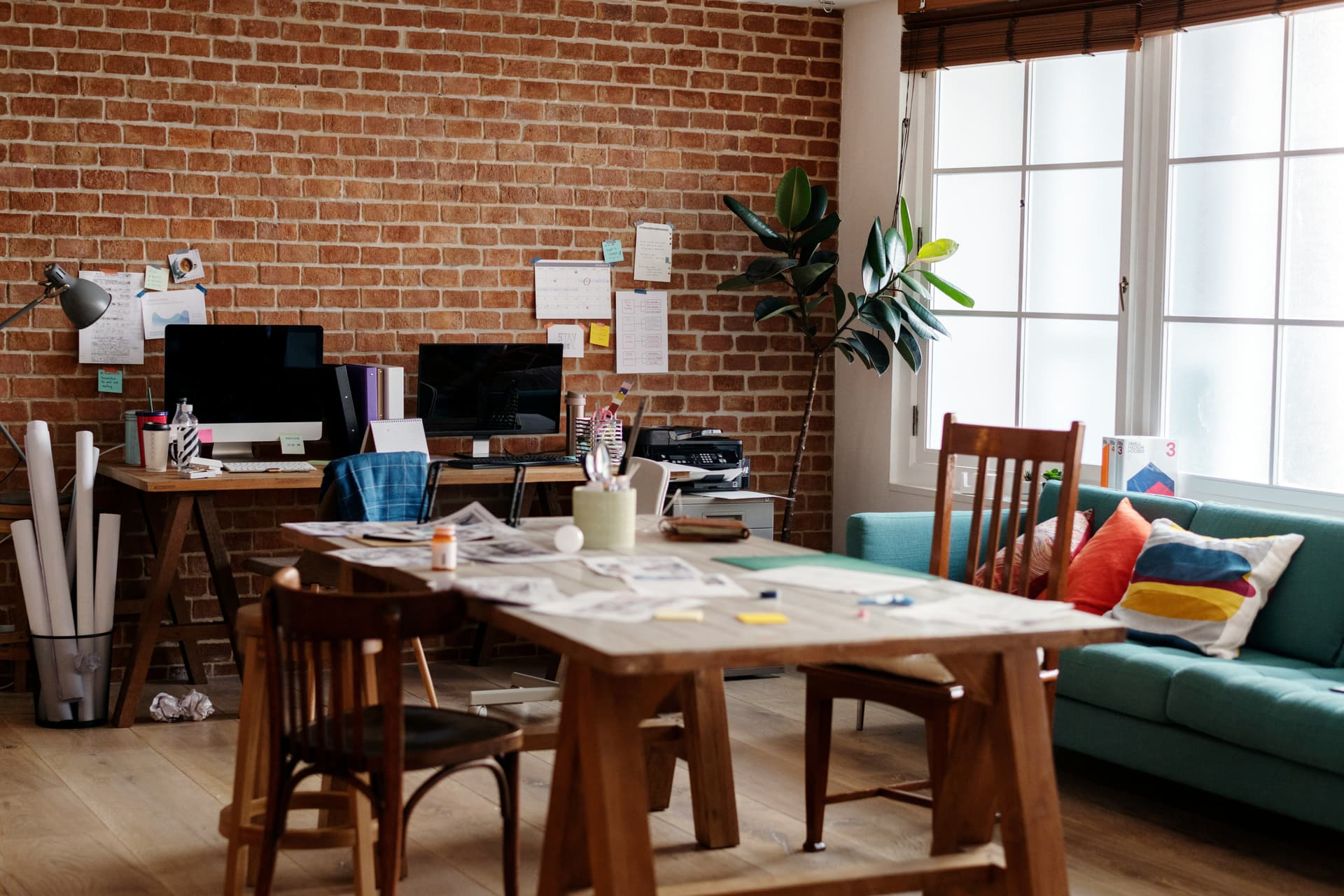
As a self-employed professional or freelancer, you face an important decision: home office or external commercial space? Both options have their pros and cons. While the home office offers flexibility and cost savings, external offices score points with professionalism and a clear separation between private and professional life. This article highlights the most important aspects such as tax deduction possibilities, infrastructure-sharing models, and helps you find the optimal solution for your professional situation. |
Choosing the right workspace is a strategic decision for the self-employed and freelancers that can have a lasting impact on your business. Whether you work from home, rent your own office, or rely on flexible coworking solutions – each option brings specific advantages and challenges. In Switzerland, there are several legal and tax-related particulars to consider that can significantly influence your choice.
Especially in the initial phase of self-employment, cost control is crucial. At the same time, you want to maintain a professional appearance and work productively. The modern working world now offers numerous solutions that can be adapted to the individual needs of freelancers and small businesses.
Home Office vs. External Office: What Suits You?
The decision between a home office and an external office depends on various factors. Both forms of work have their justification and are suitable for different business models and personality types.
The home office offers maximum flexibility and saves rental costs as well as commuting time. For many freelancers, especially in creative or IT professions, it is the first choice. You can organize your working hours freely and have all your personal comforts close at hand. However, a home office requires a high degree of self-discipline and a clear boundary between private and professional life. Not everyone can concentrate equally well at home, and social isolation can become a burden over time.
An external office, on the other hand, creates a professional framework. You have an official business address that you can put on business cards and your website. The physical separation helps many people work more productively and truly switch off after work. In addition, an external office allows you to receive clients and creates room for growth if you want to hire employees later. The disadvantage, of course, lies in the additional costs: besides the rent, there are ancillary costs, potential furnishing costs, and the time spent commuting.
For many self-employed individuals, a mixed form is also interesting. For example, you can work from home for part of the week and use a coworking space or an office on an hourly basis for client meetings or focused work phases. This hybrid solution combines the benefits of both worlds and offers maximum flexibility.
Tax Aspects of Commercial Spaces
The tax treatment of your workspace is an important factor that significantly influences the economic viability of your decision. In Switzerland, specific regulations apply that you should be aware of.
If you rent an external office or a commercial space, you can deduct the entire rent as well as the associated ancillary costs on account as business expenses from your taxable income. This also includes expenses for electricity, heating, internet, and other operationally necessary infrastructure. This full deductibility makes external offices attractive from a tax perspective.
With a home office, the situation is more complex. In principle, you can claim a portion of your housing costs as business expenses, provided you use a clearly demarcated room exclusively for business purposes. However, the tax authorities are strict here: the workspace must be separated from the rest of the living area and must not be used as a passageway or for private purposes. The deductible portion is typically calculated based on the ratio of the room's area to the total living area.
It is important to know that practices can vary by canton. Some cantons have their own guidelines or flat rates for recognizing home office costs. It is therefore advisable to clarify early on with a fiduciary or tax advisor which deductions are possible in your specific situation. Proper documentation with separate invoices and a comprehensible floor space allocation is essential.
Special rules also apply to value-added tax (VAT): while commercial rents are generally subject to VAT, the landlord may opt out of taxation under certain circumstances. As a self-employed person subject to VAT, you can claim the input tax paid on your rental costs, which represents an additional financial benefit.
Infrastructure Sharing: Use Together, Save Costs
In recent years, infrastructure sharing has developed into an attractive alternative to traditional single offices. Coworking spaces and Shared Offices, in particular, offer the self-employed and freelancers an optimal price-performance ratio.
In a coworking space, you share the premises with other self-employed individuals and small businesses. This means that infrastructure costs such as internet, printers, meeting rooms, kitchen, and reception areas are shared. You typically pay a monthly membership or book flexibly as needed. The cost savings compared to having your own office are substantial, as you only pay for actual usage and do not make any long-term commitments.
A major advantage of coworking spaces is the network. You meet like-minded people from various industries, which can lead to valuable contacts, collaborations, and new business opportunities. Many coworking providers also regularly organize networking events, workshops, and lectures that promote your professional and personal development.
For freelancers who occasionally need representative premises for client meetings, many coworking spaces also offer the option to book meeting rooms by the hour. So you don't have to invest in your own office, but you can still appear professional when it counts.
Another form of infrastructure sharing is shared offices, where several self-employed people share a fixed space. This works particularly well when the participants complement each other – for example, a graphic designer, a copywriter, and a web developer who benefit mutually from their skills and can pass jobs to each other. With this variant, clear agreements are important: Who pays which share? How are shared costs divided? How are the usage times regulated?
In Switzerland, there are established coworking providers in all major cities, but flexible workspaces are also increasingly emerging in smaller towns. Prices vary depending on the location and facilities but are usually transparent and include all essential ancillary costs.
Which Commercial Space Fits Your Business?
Choosing the right commercial space heavily depends on your industry, your business model, and your individual needs. It is worth carefully examining the various options.
Who is the home office suitable for?
The home office is ideal for you if you work primarily digitally and have little on-site customer contact. It is especially suitable for programmers, graphic designers, copywriters, translators, consultants, or online marketing specialists. If you are self-disciplined and can create clear structures, you save considerable costs with a home office. However, make sure that you have a suitable, quiet workspace and that your living situation allows for focused work.
When is a private office worth it?
Having your own office makes sense if you regularly receive clients, employ staff or plan to do so, or if you need special infrastructure. Even if your profession requires an official business address – for example, as a lawyer, architect, or management consultant – an external office is often indispensable. When calculating, don't just factor in the rent, but also furnishings, ancillary costs, and insurance.
Coworking as a flexible solution
Coworking is excellently suited for self-employed individuals in the startup phase who want to remain flexible, or for freelancers seeking variety and exchange. Even if you only temporarily need a professional environment or want to use different locations, coworking is the optimal choice. The community and infrastructure are often first-class, and you can react to changing needs at short notice.
Regardless of the solution you choose, you should always keep your medium- to long-term business development in mind. A commercial space that fits perfectly today might be too small or too expensive in two years. Flexibility in lease agreements is therefore an important criterion – especially for permanently rented offices.
Conclusion: The Right Commercial Space for Your Success
Choosing the right commercial space is one of the most important decisions for the self-employed and freelancers. There is no one-size-fits-all solution that works equally well for everyone. Rather, you must consider your individual situation, your business model, your financial resources, and your way of working.
The home office offers maximum cost efficiency and flexibility but demands discipline and a clear separation between work and private life. A private office creates professionalism and structure but requires higher investments and long-term commitment. Coworking and infrastructure sharing combine the advantages of both worlds and additionally offer valuable networking opportunities.
From a tax perspective, external offices are usually easier to account for, but there are also deduction possibilities for a home office, provided the requirements are met. Clarify these aspects early on with a specialist to optimally utilize tax benefits.
Ultimately, your workspace should help you work productively, stay motivated, and be successful. Take your time with this decision and don't be afraid to try different options. Many coworking spaces offer trial days, and when searching for an office, it is also worth visiting several properties before making a commitment.
On platforms like maison.work, you will find a large selection of commercial spaces throughout Switzerland – from classic offices to coworking spaces and specialized areas for different industries. This allows you to easily compare and find the ideal solution for your self-employment.
Note: This article is for informational purposes only and does not constitute legal or tax advice. Tax regulations can change and vary depending on the canton and individual situation. For binding information, please contact a fiduciary, tax advisor, or the responsible tax authority.
Looking for the right commercial space?
Discover offices, warehouses, workshops and other commercial spaces across Switzerland.