High-Bay Warehouse vs. Flat Warehouse – Which Storage Type Suits Your Needs?
High-bay warehouse or flat warehouse? Learn the most important differences, advantages, and disadvantages of both storage types and find out which storage solution fits your company optimally.

The choice between a high-bay warehouse and a flat warehouse is a strategic decision that significantly influences your operational efficiency. While high-bay warehouses offer maximum space utilization through their vertical construction and are ideal for companies with large volumes of goods, flat warehouses score points with simple accessibility and flexibility. In this article, you will learn the essential differences, advantages, and disadvantages of both systems and which storage type optimally fits your operational requirements. |
Choosing the right storage solution is a central decision for many Swiss SMEs and startups. Whether you run an e-commerce business, work in production, or operate a wholesale business – the way you store your goods affects not only your efficiency but also your costs and flexibility. Two fundamental concepts take center stage here: the high-bay warehouse and the flat warehouse. Both systems have their specific strengths and weaknesses, and the decision depends heavily on your individual requirements.
What is a high-bay warehouse?
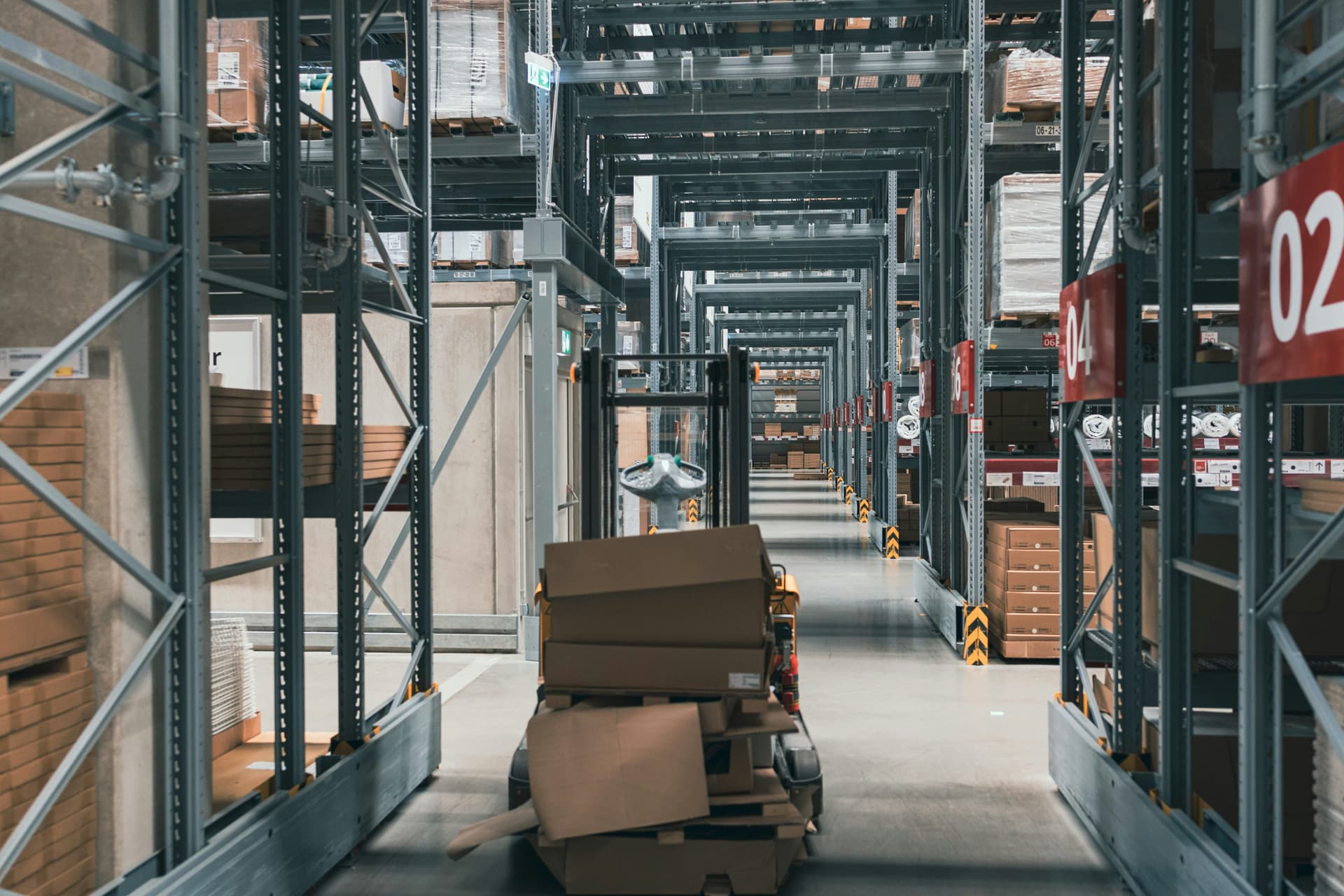
A high-bay warehouse is characterized by its vertical construction. Here, goods are stored in racks that reach several meters – sometimes up to 45 meters – in height. These warehouses make optimal use of available space by fully utilizing the ceiling height of the warehouse hall. Loading and unloading are usually carried out with special industrial trucks such as reach trucks or automated storage and retrieval systems.
High-bay warehouses are frequently used in logistics centers, large production facilities, and wholesale. They are particularly suitable for companies that need to store large quantities of uniform goods and rely on high storage capacity with limited floor space.
What is a flat warehouse?
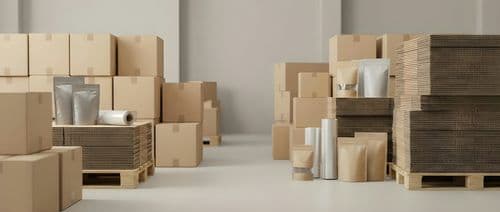
In contrast, a flat warehouse is oriented horizontally. Goods are stored on one or a few levels, typically on pallets placed directly on the floor or positioned in low rows of racks. The rack height rarely exceeds three to four meters. This type of storage is less complex and usually only requires standard forklifts for moving goods.
Flat warehouses are often used by smaller companies, production facilities with high goods turnover, or firms with changing assortments. They offer high flexibility and enable quick access to all stored items.
The main differences between high-bay and flat warehouses
The differences between the two storage types concern several central aspects:
Space utilization and space requirements
The most obvious difference lies in the use of available space. High-bay warehouses maximize the vertical dimension and can create enormous storage capacities on a relatively small footprint. This is particularly advantageous in urban areas of Switzerland where commercial space is expensive. Flat warehouses, on the other hand, require significantly more floor space to store the same amount of goods.
Investment costs and infrastructure
High-bay warehouses require a significantly higher initial investment. In addition to special racking systems, expensive industrial trucks, often automated warehouse management systems, and a correspondingly high hall construction are necessary. Flat warehouses are much cheaper to purchase and set up and require only standard warehouse technology.
Accessibility and flexibility
In a flat warehouse, every pallet is directly and quickly accessible, which facilitates and speeds up order picking. In high-bay warehouses, accessing certain goods can be more time-consuming, especially if they are stored in upper rack levels. However, modern high-bay warehouses with automated technology enable very precise and efficient warehouse management.
Operating costs and energy consumption
High-bay warehouses tend to have higher operating costs, particularly for maintenance of technology, energy for automated systems, and specialized personnel. Flat warehouses are simpler to operate and require less technical know-how, but can cause higher rental or energy costs for heating and lighting due to the larger area.
Advantages and disadvantages of the high-bay warehouse
Advantages
Maximum space utilization: High-bay warehouses use height optimally and offer enormous storage capacity on a small footprint.
Cost efficiency regarding land costs: In expensive locations like Zurich, Basel or Geneva, high-bay warehouses are economically attractive.
Automation possibilities: Modern systems enable fully automated storage processes with high precision.
Systematic storage: Ideal for companies with standardized products and high turnover frequency.
Disadvantages
High initial investment: The costs for racking systems, technology, and hall construction are significant.
Complexity: Operation and maintenance require specialized personnel and technical knowledge.
Limited flexibility: Restructuring or adapting to changed assortments is elaborate.
Safety requirements: Higher regulations regarding fire protection and structural safety.
Advantages and disadvantages of the flat warehouse
Advantages
Easy access: All goods are quickly and directly reachable, ideal for frequent picking.
Low investment costs: No expensive special technology or elaborate infrastructure needed.
High flexibility: Storage structures can be quickly adapted to new requirements.
Simple operation: Standard forklifts and lower requirements for personnel.
Safety: Lower accident risks due to lower working heights.
Disadvantages
High space requirement: Requires significantly more floor space for the same storage capacity.
Higher rental costs: Larger areas mean higher rental or purchase costs for the property.
Limited scalability: Growth requires additional space, which is often problematic in Switzerland.
Less systematic: Without sophisticated warehouse management, oversight can suffer.
Which storage type suits which need?
The decision between a high-bay and flat warehouse depends on various factors:
High-bay warehouse is ideal for:
Wholesalers and logistics service providers with high volumes of goods
Companies in expensive urban locations with limited floor space
E-commerce operations with standardized products and high turnover frequency
Firms planning to invest in automation long-term
Operations with a constant, predictable assortment
Flat warehouse is ideal for:
SMEs and startups with limited budgets
Companies with frequently changing product assortments
Production facilities with high throughput and short storage times
Firms in rural areas with cheaper land prices
Operations that prefer manual picking
Companies with bulky or heavy goods that need to be moved frequently
When making your decision, you should also consider hybrid solutions. Many modern warehouse operations combine both systems: high-bay warehouses for reserve stock and slow-moving items, and flat warehouses for fast-moving goods and picking zones.
Conclusion: The right choice for your company
The choice between a high-bay warehouse and a flat warehouse is not a one-size-fits-all decision but must be individually tailored to your company situation. High-bay warehouses offer maximum space utilization and efficiency for companies with high volumes of goods and standardized processes, but require substantial investment and technical know-how. Flat warehouses convince through simplicity, flexibility, and low entry costs, but require significantly more floor space.
For most Swiss SMEs, a flat warehouse that can grow with the company is initially recommended. Only when storage capacities reach their limits or land costs become a factor does switching to a high-bay warehouse or a combination of both systems become worthwhile. It is important that you consider your current needs as well as your medium-term growth strategy.
If you are looking for suitable storage spaces, you will find a large selection of commercial real estate throughout Switzerland on maison.work – from small storage areas for startups to large logistics centers for established companies.
Note: This article serves for general information purposes and does not replace individual advice. For specific questions regarding storage solutions, building regulations, or technical requirements, we recommend consulting experts from the logistics industry or architecture.
Looking for the right commercial space?
Discover offices, warehouses, workshops and other commercial spaces across Switzerland.