Storage Spaces for E-Commerce: What is Important Today?
Discover the requirements modern e-commerce storage spaces must meet and how to determine the right storage size for your online business.


The e-commerce boom has fundamentally changed the requirements for storage spaces. While traditional warehouses were often designed for long storage periods, online retailers today need flexible, well-connected, and technically equipped spaces for fast turnaround times. The right storage size depends on factors such as product range, order volume, and seasonality. In this article, you will learn what is important when choosing the perfect e-commerce storage space and how to realistically estimate your actual space requirements. |
The most important requirements for modern e-commerce storage spaces
The requirements for storage spaces in e-commerce differ significantly from traditional storage solutions. The focus is no longer exclusively on pure storage, but on efficient processes from goods receipt to shipping. Modern e-commerce storage spaces must meet several key criteria to satisfy today's market demands.
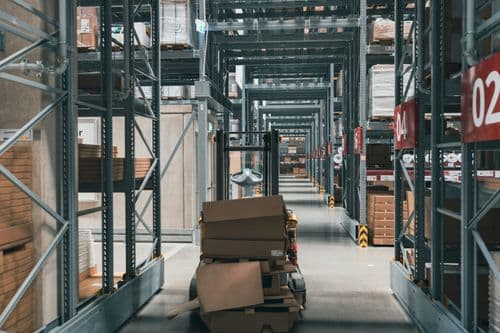
One of the most important aspects is the room layout. You not only need floor space for shelving, but also sufficient room for packing stations, returns areas, and quality control. A well-thought-out zoning according to product groups or turnover speed can significantly reduce your picking times. Many successful online retailers rely on an ABC analysis: fast-moving items are placed in close proximity to the shipping area, while slower items can be stored further away.
The technical equipment also plays a crucial role. A stable internet connection is indispensable, as modern warehouse management systems are cloud-based and require real-time data. Furthermore, you should ensure there are enough power outlets for scanners, computers, and label printers. Many e-commerce companies initially underestimate the energy requirements for lighting, air conditioning, and IT infrastructure.
Another important factor is security. E-commerce warehouses often house high-value goods and must be appropriately protected against break-ins and theft. Check whether the property has modern security systems, video surveillance, and controlled access. Insurance coverage also frequently depends on the existing security measures.
Required storage size for e-commerce: How to calculate your needs
Determining the right storage size is one of the most important decisions for e-commerce companies. Sizing too small leads to bottlenecks and missed sales opportunities, while sizing too large means unnecessary rental costs. A well-founded needs analysis is based on several factors that you should evaluate carefully.
Start with an inventory analysis of your current product range. Record the number of SKUs (Stock Keeping Units), i.e., the individual item numbers in your assortment. Multiply this by the average inventory per item. A fashion shop with 500 items and an average of 20 pieces per item needs space for 10,000 units. Also, consider the physical dimensions: small pieces of jewelry require significantly less space than sports equipment or furniture.
As a rule of thumb: plan for about 2-3 cubic meters of storage volume for every square meter of storage space if you work with standard shelves. To calculate the floor space, you can use the following formula: (Number of pallets × 1.2 m²) + (Workspace for picking) + (Packing area) + (Traffic routes). A small online shop often starts with 50-100 m², while medium-sized e-commerce businesses need 200-500 m².
Do not forget to plan for growth and seasonality. Many e-commerce companies experience 2-3 times the order volume in the fourth quarter (Black Friday, Christmas). Your storage space should be able to handle these peaks without you having to invest in makeshift solutions. Experts recommend planning for at least 20-30% buffer capacity. Also, consider your planned growth: if you aim to double your revenue in the next two years, your storage space should be able to support this development.
A practical approach is calculating based on your order frequency. If you process 50 orders daily with an average of 2 items, that is 100 picks per day. With an average picking time of 2 minutes per pick, you need efficient walking routes. The more compact and better organized your warehouse is, the faster you can process orders. The optimal storage size is therefore not just a question of volume, but also of process efficiency.
Location choice: Where should your e-commerce storage be located?
The location of your storage space directly impacts your delivery times, shipping costs, and customer satisfaction. Various location strategies are available in Switzerland, depending on your target audience and business model.
For online retailers who primarily serve the Swiss market, central locations such as the Zurich area, Bern, or the regions along the A1 axis are ideal. These locations enable nationwide delivery across Switzerland within 24 hours. The proximity to the distribution centers of major parcel service providers (Swiss Post, DPD, UPS, etc.) is a decisive advantage here. The shorter the distance to the first sorting facility, the later you can make orders available for same-day pickup.
Accessibility by various means of transport is another important factor. Your employees should be able to reach the warehouse easily, whether by public transport or by car. Sufficient parking spaces for employees and delivery vehicles are essential. Also, check the access options for larger delivery vehicles: narrow streets in residential neighborhoods can become a problem when pallets need to be delivered.
Consider regional cost differences
Rental prices for storage spaces vary considerably in Switzerland. While square meter prices are particularly high in Zurich and Geneva, you can find significantly cheaper offers in more rural regions or in cantons like Solothurn, Aargau, or Thurgau. For many e-commerce startups, a compromise is worthwhile: a location near the agglomeration often offers the best price-performance ratio. You benefit from moderate rent while maintaining good transport connections.
Also think about future expansion possibilities. Are there other storage spaces at the chosen location that you could additionally rent as you grow? Flexibility is worth its weight in gold in the fast-paced e-commerce business. Some landlords also offer options on adjacent spaces, giving you planning security.
Technical infrastructure and equipment
The technical infrastructure is the backbone of every modern e-commerce warehouse. Without the right equipment, even the best products cannot be shipped efficiently. When viewing potential storage spaces, you should closely examine the following aspects:
The internet connection comes first. Do not only check whether a connection is available, but also what bandwidth is provided. For cloud-based inventory management systems, scanner connections, and potential video conferences, at least 50-100 Mbit/s should be available. In some older commercial buildings, only DSL is available, which is often insufficient for modern e-commerce requirements. Inquire with the landlord or directly with telecommunications providers about the availability of fiber optic connections.
The power supply must be able to meet your needs. In addition to lighting and heating, you need electricity for computers, printers, scanners, and possibly for air conditioning units. Check whether there are enough power outlets and if they are strategically distributed. In many cases, you will need to do additional wiring, which should be considered in your cost planning. Ask the landlord about the available connection capacity and whether it is sufficient for your purposes.
The ceiling height is particularly important if you want to work with pallet racks. A ceiling height of at least 4-5 meters allows for efficient vertical storage and maximizes your storage capacity. Modern high-bay warehouses make optimal use of height and can thus reduce the required floor space. Also pay attention to the load-bearing capacity of the floors: not every storage space is designed for heavy-duty shelving or forklifts.
Sanitary facilities and staff rooms are legally required and important for the well-being of your employees. Check whether there are sufficient toilets, washing facilities, and ideally a small kitchen or break room available. These factors significantly influence your team's satisfaction and should not be underestimated.
Flexible rental models for growing online shops
E-commerce companies often go through rapid growth phases that require flexible solutions. Rigid, long-term rental agreements can become an obstacle. In Switzerland, various rental models tailored to the needs of online retailers have established themselves in recent years.
Classic commercial leases in Switzerland often have a minimum term of 3-5 years with a notice period of 6 months. For startups and fast-growing e-commerce companies, this can be problematic. Negotiate with the landlord for shorter terms or a graduated rent that grows alongside your business. Some landlords also offer options for space expansion, which gives you planning security.
An alternative is co-working spaces for warehousing, also known as shared warehousing. Here you only rent the space you actually need and can expand or downsize as required. These models are particularly interesting for startups, as they do not require large initial investments. The infrastructure (shelves, scanners, packaging material) is often already in place, significantly reducing your startup costs.
Temporary storage solutions are ideal for seasonal businesses. If you know you only need additional space for the Christmas business, you can rent it for a few months. Some specialized providers have focused on such short-term solutions. You should carefully check the on-account ancillary costs in any case. These can vary greatly depending on the property and often include heating, water, waste disposal, and janitorial services. Ask for a detailed breakdown and check whether they are realistically calculated.
Conclusion: The right storage space as a success factor
Choosing the right storage space is a crucial success factor for e-commerce companies. A well-thought-out decision not only considers the current situation but also future growth and seasonal fluctuations. The required storage size depends on your product range, your order frequency, and your processes. A realistic needs analysis prevents costly wrong decisions.
Modern e-commerce storage spaces must offer more than just four walls. The technical infrastructure, transport connections, and flexibility of the rental agreement are just as important as the pure square footage. Invest time in choosing a location and do not hesitate to compare several options. Proximity to parcel service providers and good accessibility for your team will pay off in the long term.
Remember that your warehouse should grow with your business. Flexible rental models and the option to expand give you the necessary leeway. Use platforms like maison.work to find suitable storage spaces in your region and compare different offers. With the right storage solution, you lay the foundation for efficient operations, satisfied customers, and sustainable growth for your e-commerce business.
Disclaimer: This article serves as general information and does not replace individual consultation. Tenancy law questions should be clarified with a specialist lawyer or the responsible conciliation authority if necessary.
Looking for the right commercial space?
Discover offices, warehouses, workshops and other commercial spaces across Switzerland.