Atelier, Workshop, and Studio: The Differences Simply Explained
Renting an atelier, workshop, or studio? Learn the key differences between these space types and find out which room is ideal for your business.

Atelier, workshop, or studio – these terms are often used synonymously but refer to different room types with specific characteristics. While an atelier is traditionally designed for artistic activities with plenty of natural daylight, a workshop serves manual and production-oriented work with robust equipment. A studio, on the other hand, is more versatile and is often used for creative services such as photography, sound engineering, or design. Choosing the right room type depends on your activity, spatial requirements, and legal frameworks. In this article, you will learn the most important differences and what to look out for when renting. |
What is an atelier? Definition and typical use
An atelier is traditionally a workspace for visual artists such as painters, sculptors, or illustrators. The term comes from French and literally means "workshop," but in the German-speaking world, it has become established specifically for artistic workspaces. The characteristic feature of an atelier is the availability of natural light, ideally through large windows or skylights that offer northern light – a preferred light source for artists because it is even and without direct sunlight.
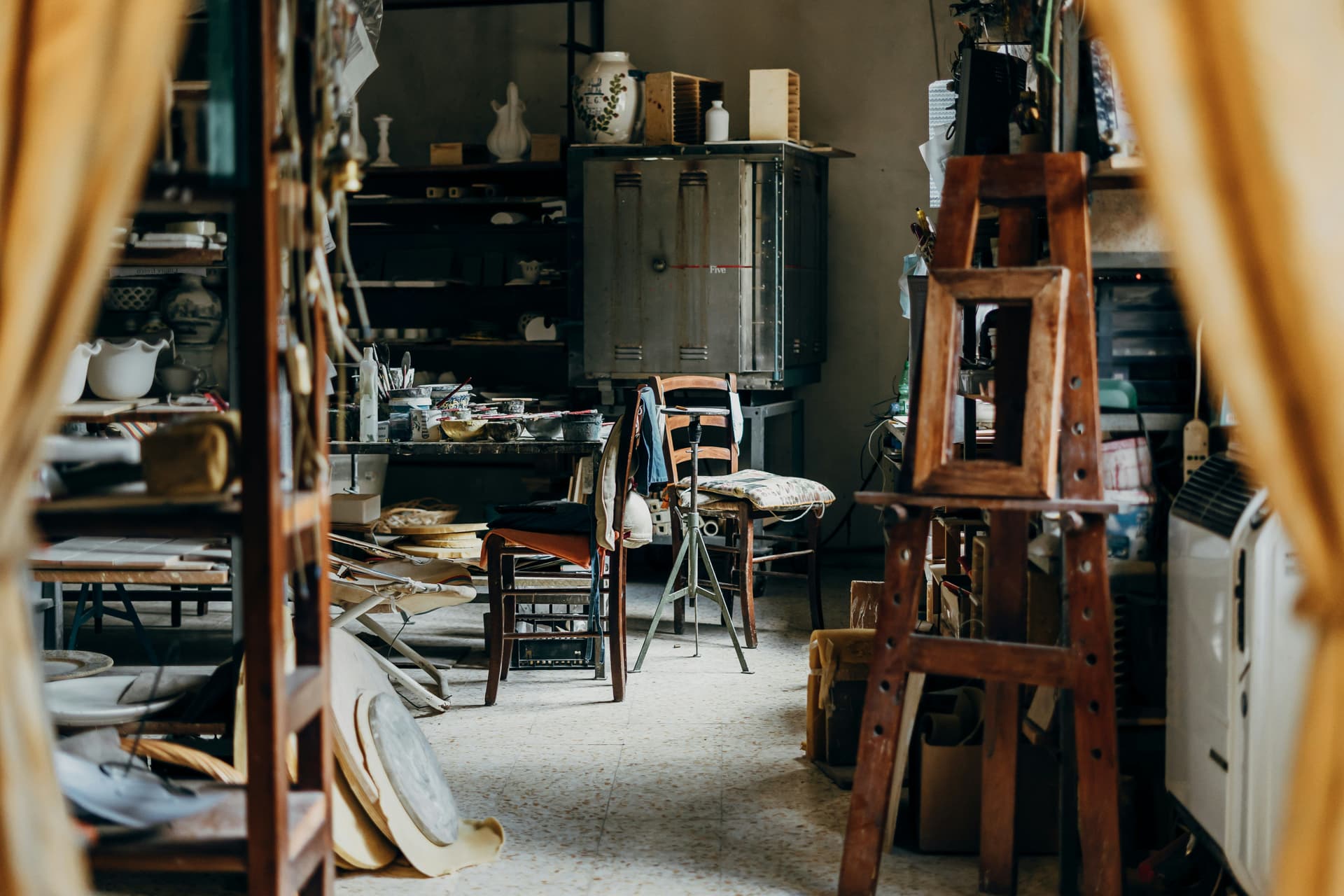
Ateliers are often located in former industrial buildings, attics, or specially converted rooms with high ceilings. This room height allows working on large-format pieces and offers sufficient space for easels, sculptures, and the storage of materials. In Switzerland, you will find atelier spaces especially in urban centers like Zurich, Basel, or Geneva, but atelier spaces in former factory areas are also increasingly being offered in smaller cities.
The use of an atelier is not limited exclusively to the classic visual arts. Graphic designers, architects, or product designers also use atelier spaces for their conceptual and creative work. It is important that the main activity is of a creative-artistic nature and does not involve noise-intensive or highly production-oriented work.
What is a workshop? Features and purposes
A workshop is a workspace primarily designed for manual, technical, or production-oriented activities. In contrast to the atelier, the focus here is not on artistic creation, but on the practical manufacturing, repair, or processing of objects and materials. Workshops are used by craftsmen such as carpenters, metalworkers, mechanics, electricians, or even artisans.
Typical features of a workshop are a robust construction with durable floors, sufficient power connections for machines and tools, good ventilation or extraction systems for dust and fumes, and often ground-level access for the delivery of materials. The premises often must meet special safety requirements, especially if working with hazardous substances or generating noise emissions.
In Switzerland, depending on the activity, workshops are subject to various regulations regarding occupational safety, noise protection, and environmental requirements. Before you rent a workshop, you should ensure that the planned use is compatible with the zoning regulations and any conditions set by the landlord. Many landlords require a detailed description of the planned activities to avoid potential conflicts with other tenants or neighbors.
Workshops are often found in commercial zones, industrial areas, or specially designated building complexes. They usually offer more flexibility regarding noise and dirt generation than ateliers or studios, which are often housed in mixed-use buildings.
What is a studio? Areas of application and characteristics
The term studio is much more versatile than atelier or workshop and encompasses various types of uses in the creative and service-oriented sector. Studios are used, among other things, for photography, video production, music recording, dance, yoga, podcasts, or as design offices. Unlike the atelier, the focus is less on the artistic creation process itself and more on professional production or service provision.
A photo studio, for example, needs enough space for backgrounds, lighting equipment, and possibly a separate area for post-processing. The lighting here is mostly artificial and flexibly controllable, as opposed to the natural light in the atelier. Recording studios, in turn, require soundproofed rooms with special acoustics to enable professional recordings. Dance studios or yoga studios primarily need free floor space, mirrors, and good ventilation.
Studios are often located in central areas with good accessibility, as they are frequently visited by clients or course participants. The infrastructure should be correspondingly customer-friendly, with parking spaces, barrier-free access, and possibly waiting areas. In Switzerland, you will find studio spaces both in modern commercial centers and in converted old buildings or lofts.
Equipment requirements vary greatly depending on the type of studio. While a design studio mainly requires workstations, internet, and presentation areas, a recording studio requires complex technical installations. This specialization makes studios their own category of commercial spaces.
Atelier vs. Studio: The most important differences
Although both atelier and studio belong to the creative sector, there are significant differences in use, equipment, and objectives. The main difference lies in the nature of the activity: An atelier is primarily a place for artistic creation, whereas a studio is more for professional production or services.
In an atelier, the artist typically works on their pieces themselves, often in solitary work or with a few assistants. The end product is usually a unique piece or a small series. A studio, however, is often a place where client orders are professionally executed – be it in photography, music production, or design. Here, the workflow is often more standardized and the rooms are designed for efficient production processes.
Another major difference concerns the lighting conditions. While ateliers ideally have generous daylight, studios are often equipped with controllable artificial lighting, as daylight can lead to unpredictable results in professional photo or video shoots. The room design in an atelier is often more personal and less standardized, while studios are functional and optimized for the specific production process.
The location often differs as well: Ateliers can also be in quieter, more secluded places, while studios – especially if they have customer contact – prefer a central, easily accessible location. The cost structure is also different: Studios with special technical equipment are often more expensive to rent and maintain than a simple atelier.
Atelier vs. Workshop: Where are the boundaries?
The boundary between an atelier and a workshop is sometimes fluid, especially in the field of arts and crafts. Fundamentally, however, it can be said that an atelier is designed more for finer, artistic work, while a workshop is intended for more robust, manual activities.
A painter works in an atelier, a carpenter in a workshop – this classic distinction illustrates the fundamental difference. The workshop is geared towards the processing of materials using tools and machines, whereas the atelier primarily involves working with brushes, pens, or moldable materials. Accordingly, the requirements for the floor, walls, and infrastructure also differ significantly.
Noise emissions are another distinguishing feature. Workshops often produce considerable noise from machines, hammering, or sawing, which places special demands on soundproofing and the location of the room. Ateliers are generally much quieter and can therefore also be located in residential or mixed-use areas. This distinction is also relevant in terms of tenancy law, as landlords and neighbors have different expectations.
A sculptor working with stone finds themselves in a gray area: Their activity is artistic, but requires workshop-like conditions with dust-resistant floors, good ventilation, and possibly noise protection. In such cases, one sometimes speaks of a "sculptor's atelier," which actually has the characteristics of a workshop. When renting, it is important to accurately describe the actual use to avoid later conflicts.
Legal and tenancy law aspects when renting
Various legal aspects must be considered when renting an atelier, workshop, or studio. First, the usage agreement in the lease contract is crucial. This should clearly define what type of activity may be carried out. A formulation that is too vague can lead to problems later if the landlord classifies the use as a breach of contract.
In Switzerland, the Code of Obligations (CO), in particular Articles 253ff, generally applies to commercial leases. Unlike residential property, protection against dismissal for commercial premises is less pronounced. Notice periods and termination dates should be precisely recorded in the contract. Notice periods of three to six months for a specific date are standard.
The zoning regulations of the municipality also play an important role. Workshops with noise emissions are often not permitted in residential zones, while ateliers can be tolerated in mixed zones depending on the municipality. Before signing a contract, find out about the permitted uses in the relevant zone from the responsible building authority.
Other important contract points are:
- On-account ancillary costs: Which additional costs are included in the rent, and which are billed separately?
- Maintenance and upkeep: Who is responsible for which repairs?
- Conversions and adjustments: Are you allowed to make structural changes? Do you have to reverse them when moving out?
- Insurance: Is commercial liability insurance required?
- Opening hours and access: Are there restrictions regarding working hours or customer traffic?
In the event of disputed points or ambiguities in the lease agreement, the conciliation authority for tenancy matters can be contacted. This is available in every canton and offers free or low-cost advice on tenancy law issues.
Which room type suits your business?
The choice of the suitable room type strongly depends on your activity and your specific requirements. Ask yourself the following questions to make the right decision:
For artists and designers
If you work as a painter, illustrator, or visual artist, an atelier is the ideal choice. Look for sufficient natural light, high ceilings for large-format works, and a quiet environment that promotes creative work. An atelier can also be suitable for graphic designers or architects who work conceptually, provided the main activity is creative and not primarily digital.
For craftsmen and producers
If you are a carpenter, metalworker, mechanic, or run a small production facility, you need a workshop. Important factors are robust floors, sufficient power connections, good ventilation, and ideally ground-level access. Also check whether noise emissions are tolerated in the area and whether special safety precautions are required.
For creative service providers
Photographers, video producers, musicians, or yoga teachers are well-advised to choose a studio. Depending on the specialization, the requirements vary considerably: A photo studio needs flexibility in room design, a recording studio requires soundproofing, a yoga studio needs free space and a pleasant atmosphere. Also consider the accessibility for clients and the presentation options for your work.
For many activities, there are also mixed forms or flexible solutions such as coworking spaces with workshop access or atelier houses with communal areas. Platforms like maison.work offer an overview of various commercial spaces throughout Switzerland and help you find the right space for your needs.
Conclusion: The right choice for your creative or craft project
The terms atelier, workshop, and studio describe different room types with specific characteristics and purposes. An atelier is the ideal place for artistic creation with a focus on daylight and an inspiring atmosphere. A workshop offers the robust infrastructure for manual and production-oriented activities. Finally, a studio is versatile and can be used for creative services and professional productions.
When choosing the right space, you should not only consider the spatial requirements but also carefully examine legal aspects such as usage agreements, zoning regulations, and the lease contract. The location, infrastructure, and cost structure also play an important role in the long-term success of your project.
Take your time with the search and visit several properties before making a decision. Thorough planning and clear communication with the landlord about your planned use will help avoid later conflicts. With the right space, you create the ideal foundation for your creative or craft project and can fully concentrate on your work.
Note: This article is for general information purposes and does not replace individual legal advice. In the case of complex tenancy law questions or uncertainties regarding usage regulations, we recommend consulting a specialist or the responsible authorities.
Looking for the right commercial space?
Discover offices, warehouses, workshops and other commercial spaces across Switzerland.