How may a hobby room be used?
Are you allowed to sleep in your hobby room or set up an office there? Find out what is legally permitted, how to avoid trouble with neighbours and how to get the most out of your space.

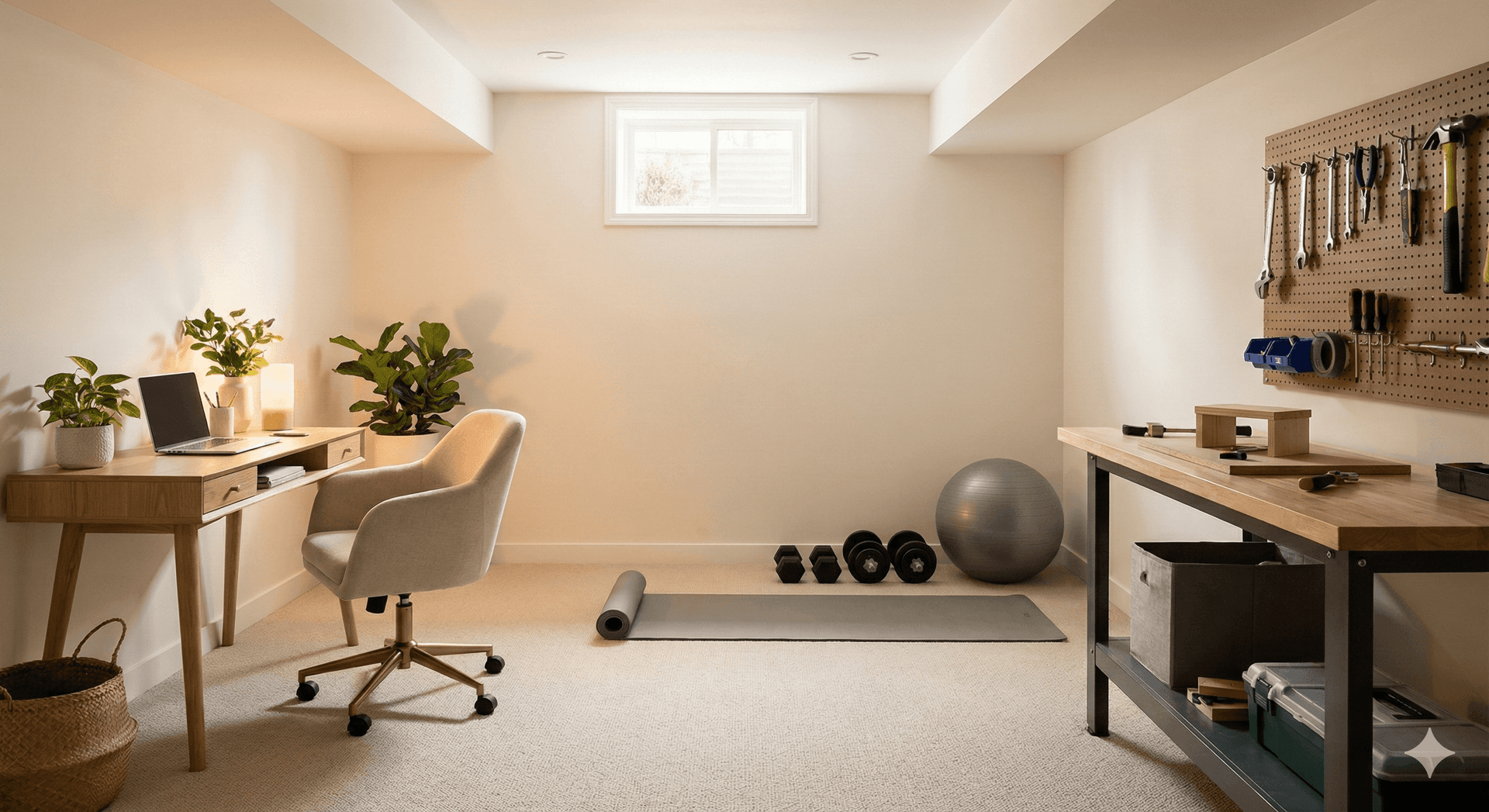
A hobby room offers valuable space for creativity, sports, or work. But beware: Legally, it is not a living space. While crafting, fitness, and quiet work are usually problem-free, permanent sleeping or setting up a commercial workshop is often prohibited. In this article, you will learn where the limits lie and how to get the most out of your extra square meters.
Perhaps you know the feeling: The apartment suddenly feels cramped, the drum set is in the way, or the yoga mat has to be laboriously unrolled between the sofa and the dining table every time. A hobby room seems like the perfect solution. It promises freedom, peace, and the necessary space for passions that don't fit within your own four walls. But before you move into your new domain, you should know that a hobby room is not a free pass for any use. There are clear rules that determine whether your retreat remains a dream or turns into a legal nightmare.
What actually defines a hobby room?
In the real estate sector, hobby rooms are usually found in basements or attics. The crucial point is the legal designation. In most cases, a hobby room is declared as non-residential space. There are valid reasons for this: often, the minimum ceiling heights required for living spaces, sufficient thermal insulation, or the necessary window areas for daylight and ventilation are missing.
If you rent or buy such a space, you generally pay a significantly lower price per square meter than for actual living space. However, this price advantage comes with obligations. You may use the room, but you may not live in it. A hobby room is intended for you to stay there temporarily. Specifically, this means: crafting, painting, fitness, or sorting your stamp collection are perfectly legitimate.
Even if the room is comfortably furnished and has heating, it may not be used as a permanent sleeping area. This is not only due to bureaucratic regulations but, above all, to your safety. Living spaces are subject to strict fire protection regulations and must guarantee escape routes (often through windows of a certain size). A basement room without a full-sized window usually does not meet these requirements. Anyone who regularly lets guests stay there overnight or even moves in themselves risks massive trouble with the authorities or the insurance company in case of an inspection or damage.
Home office in the hobby room - a grey area?
In times of remote work, many wonder: Can I move my office to the hobby room? The answer is: It depends. If you, as an employee, occasionally sit in the hobby room for a few hours with your laptop, hardly anyone will object. This is considered "quiet use," which neither excessively stresses the building fabric nor disturbs the neighbors.
It's different if you register a business there or spend eight hours daily. For a permanent workplace, similar requirements apply as for living spaces - especially regarding light and ventilation. Furthermore, intensive commercial use (e.g., with customer traffic) could require a change of purpose, which must be approved by the management and often also by the municipality.
Noise, smells, and the beloved neighbors
A hobby room is rarely in a vacuum. Usually, other people are in the immediate vicinity. This is where many hobby projects fail. Just because it's a hobby room doesn't mean you can make unlimited noise there.
Anyone setting up a carpentry workshop or starting a rock band must observe the applicable quiet hours and sound insulation. The same applies to smells: anyone who passionately works with paints or builds models must ensure that the fumes do not spread throughout the stairwell. Good ventilation is crucial here - both for neighborly peace and for one's own health, as basement rooms are often poorly ventilated and tend to accumulate moisture.
Checklist before renting: What to look out for
Before you sign the contract, you should critically inspect the space. Does your vision match the reality of the room?
First, you should check for moisture. Does it smell musty? Are there dark spots on the walls? In many basements, the humidity is too high for storing sensitive items like books or fabrics. A hygrometer can provide certainty here.
Secondly, the power supply is important. Are there enough outlets for your devices? If you want to operate heavy machinery or multiple computers, the circuit protection should be adequate. Thirdly, you should check the internet connection. Wi-Fi often fails miserably in reinforced concrete basements. A LAN connection or a good repeater is indispensable for many hobbies today.
Your space, your responsibility
A hobby room is a great way to enhance quality of life without having to move into a more expensive apartment. It provides the necessary buffer between everyday life and passion. If you adhere to the rules - meaning you don't misuse the space for living and show consideration for your surroundings - nothing stands in the way of your project.
Hobby rooms are incubators for creativity. Whether as a private gym, an atelier, or a retreat for reading: utilize the potential, but stay within the legal possibilities. This way, the hobby room remains exactly what it should be: a place that brings you joy.
Looking for the right commercial space?
Discover offices, warehouses, workshops and other commercial spaces across Switzerland.